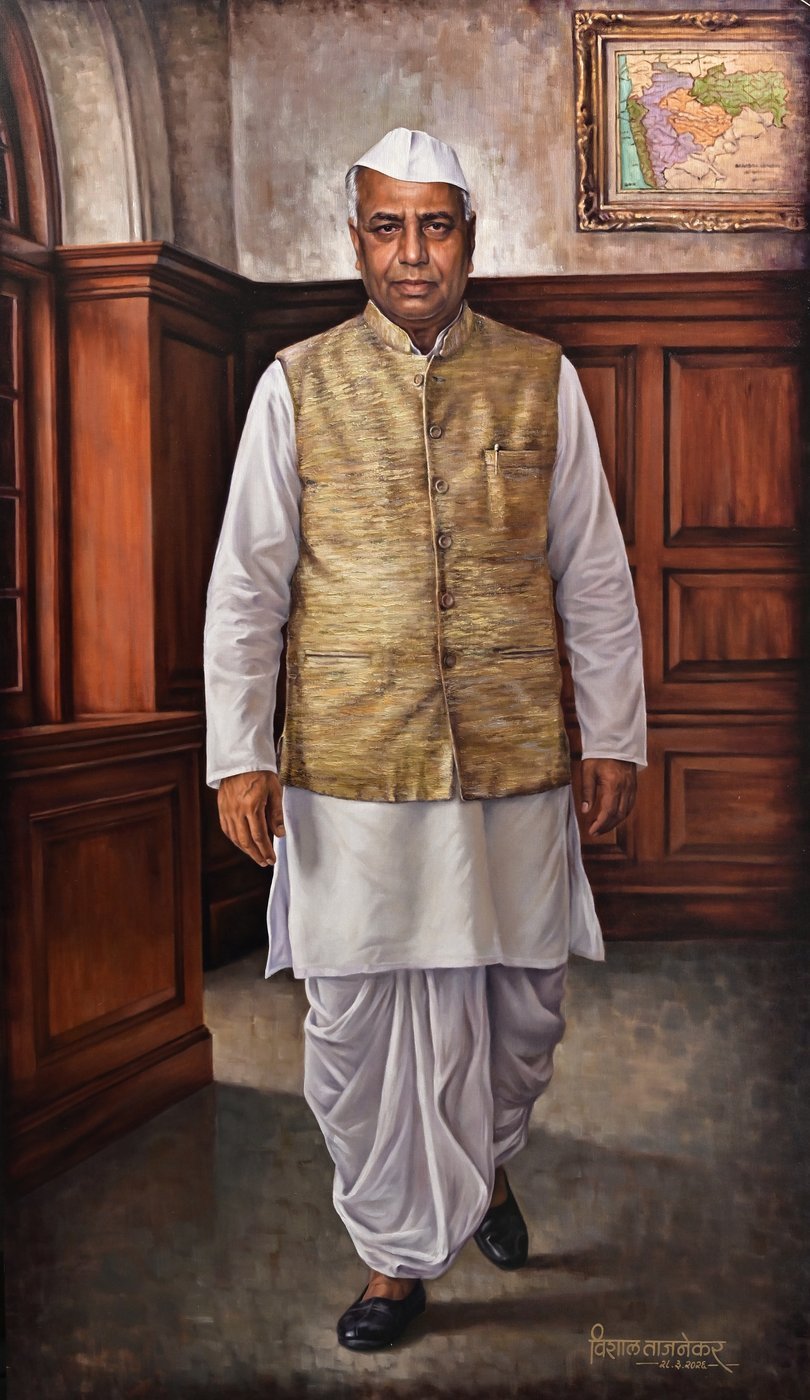
Loknete Yashwantrao Chavan
लोकनेते यशवंतराव चव्हाण
Yashwantrao was born at his maternal grandparents' home in Deorashtre village, in the old Satara district nestled in the Sahyadri mountains. After the untimely death of his father, Balwantrao, his mother Vithabai raised the children through great hardship. Two months after his marriage to Venutai, the nationwide 'Quit India' movement began. Yashwantrao led the movement in Satara district and endured imprisonment. His personality embodied a unique confluence of politics and culture, like the confluence of the Krishna and Koyna rivers at 'Preeti-Sangam'.
His journey from Chief Minister of the bilingual state to the first Chief Minister of united Maharashtra proved pivotal in shaping the state's destiny. He took several strategic decisions for the state's comprehensive development. Through a three-pronged approach of the cooperative movement, 'Panchayat Raj' and industrial progress, he made rural Maharashtra self-reliant. He played a vital role in securing official language status for Marathi and promoted literature and culture. In 1962, Prime Minister Jawaharlal Nehru summoned him to Delhi and appointed him Defence Minister. He modernized the Indian military and strengthened the armed forces. Later, as Deputy Prime Minister, Finance Minister, Home Minister and External Affairs Minister, he remained attentive to Maharashtra's concerns while enhancing the state's stature in Delhi.
Even while navigating politics, Yashwantrao preserved his cultured, sensitive and literary spirit. Respecting the opposition and winning over critics through his refined thinking, he laid the foundation for a new political culture in Maharashtra. Known as the 'Architect of Modern Maharashtra,' the footprints he left—from the soil of the Krishna riverbanks to Delhi—continue to inspire.
सह्याद्रीच्या कुशीत वसलेल्या जुन्या सातारा जिल्ह्यातील देवराष्ट्रे गावी, आजोळी यशवंतरावांचा जन्म झाला. वडील बळवंतराव यांच्या अकाली निधनानंतर आई विठाबाईंनी मोठ्या कष्टाने मुलांचे संगोपन केले. वेणूताईंशी विवाह झाल्यानंतर अवघ्या दोन महिन्यांत देशभर सुरू झालेल्या 'चले जाव' आंदोलनात यशवंतरावांनी सातारा जिल्ह्याचे नेतृत्व केले आणि तुरुंगवासही भोगला. त्यांच्या व्यक्तिमत्त्वात कृष्णा आणि कोयनेच्या प्रीतीसंगमासारखा राजकारण आणि संस्कृतीचा अपूर्व संगम झाला होता.
द्वैभाषिक राज्याचे मुख्यमंत्री ते संयुक्त महाराष्ट्राचे पहिले मुख्यमंत्री हा त्यांचा प्रवास महाराष्ट्राची भाग्यरेषा बदलवणारा ठरला. राज्याच्या सर्वांगीण विकासासाठी त्यांनी अनेक धोरणात्मक निर्णय घेतले. सहकारी चळवळ, पंचायत राज आणि औद्योगिक प्रगतीची त्रिसूत्री देत त्यांनी ग्रामीण महाराष्ट्राला स्वावलंबी बनवले. मराठीला राजभाषेचा दर्जा मिळवून देण्यात मोलाची भूमिका बजावत त्यांनी साहित्य-संस्कृतीच्या संवर्धनासाठी पुढाकार घेतला. पंतप्रधान जवाहरलाल नेहरूंनी १९६२ मध्ये दिल्लीला बोलावून संरक्षणमंत्रिपद दिल्यावर त्यांनी भारतीय सैन्याचे आधुनिकीकरण करत सैन्यदलांना सक्षम केले. पुढे केंद्रात उपपंतप्रधान, अर्थमंत्री, गृहमंत्री आणि परराष्ट्रमंत्री म्हणून कारभार सांभाळताना त्यांनी राज्याच्या प्रश्नांवर लक्ष ठेवत दिल्लीत महाराष्ट्राची प्रतिष्ठा वाढवली.
राजकारणात यशस्वीपणे वावरतानाही यशवंतरावांनी आपल्यातील सुसंस्कृत, संवेदनशील व साहित्यिक मन जपले. विरोधी पक्षाचा सन्मान करत आणि टीकाकारांनाही आपल्या सुसंस्कृत विचारांनी आपलेसे करत त्यांनी महाराष्ट्रात नव्या राजकीय संस्कृतीची पायाभरणी केली. 'आधुनिक महाराष्ट्राचे शिल्पकार' म्हणून ओळखल्या जाणाऱ्या यशवंतरावांच्या कृष्णाकाठच्या मातीतून दिल्लीपर्यंत उमटलेल्या पाऊलखुणा आजही प्रेरणादायी ठरतात.