Lokshahir Anna Bhau Sathe
लोकशाहीर अण्णा भाऊ साठे
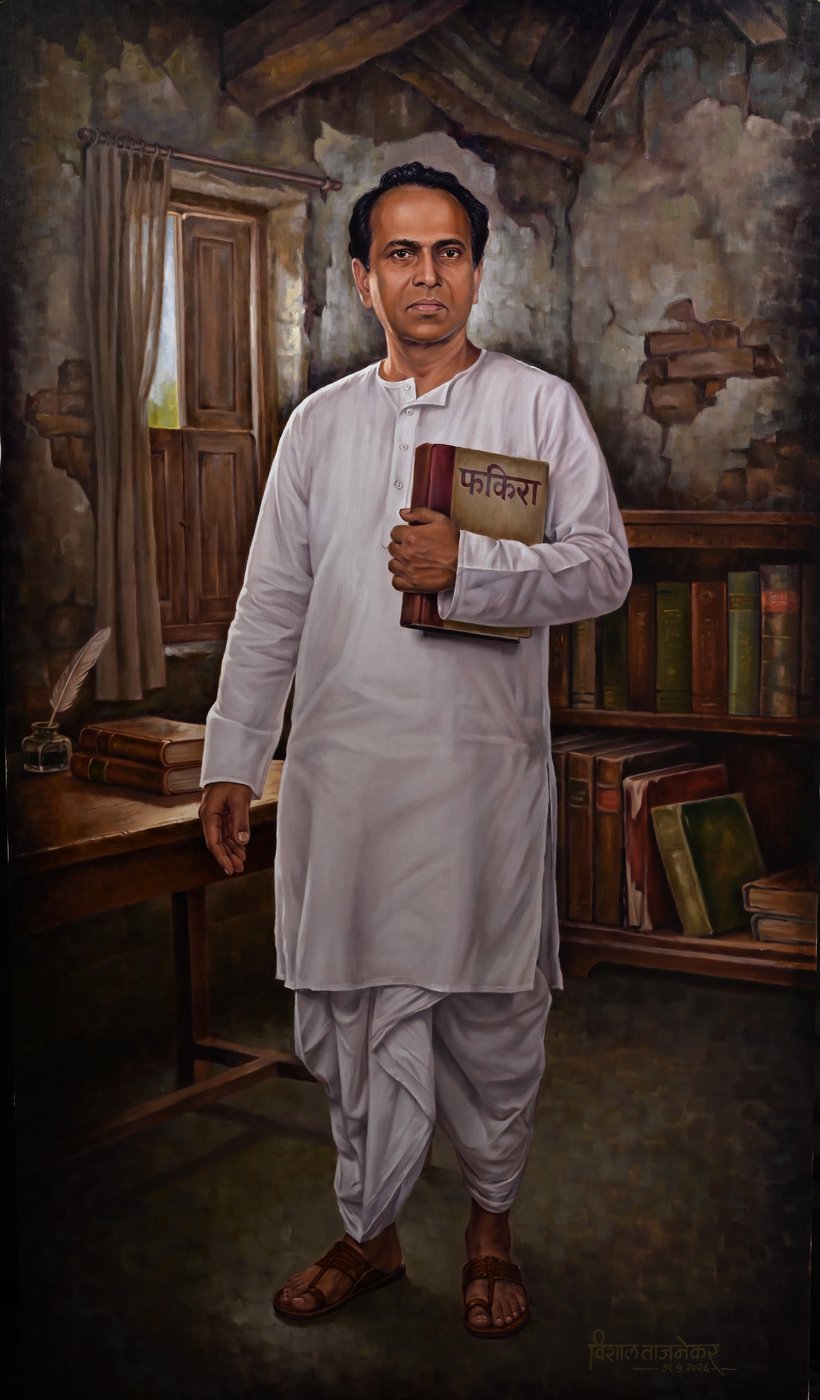
Tukaram, known by his nickname Anna, was born to Bhaurao and Valubai in a settlement on the outskirts of Wategaon in Sangli district, Maharashtra. He spent his childhood in the Warna valley amidst social and economic struggles. Without formal education or a family tradition of learning, he educated himself in the 'school of experience' and ushered in a new era in Marathi literature.
Driven to Mumbai by drought, Anna Bhau worked at various jobs and experienced workers' lives at close quarters. Immersing himself in their world, he was influenced by Marxist thought. The poet and extraordinarily gifted Shahir within him came alive. Turning his pen and Daf into weapons against exploitation, Comrade Anna Bhau took Marathi literature directly to the huts of the working class. Guided by ideological commitment, he explored Povada, Lavani, songs, stories, novels, travelogues, plays and Loknatya. Through his writing, he revealed the marginalized world unfamiliar to Marathi literature. Transforming Tamasha into Loknatya, he gave it seriousness, prestige and social recognition. During the Samyukta Maharashtra movement, his Lavani and Shahiri ignited a revolutionary spark among the Marathi people. His 'Lal Bavta Kalapathak' travelled from village to village, mobilizing thousands. Anna Bhau travelled to Russia on the strength of his writing and brought honour to Marathi literature.
Breaking Marathi literature's traditional framework, Anna Bhau portrayed a hero from a marginalized community fighting injustice in his stories and novels. Using art for public education and social awareness, he was a radiant 'Red Star' in Maharashtra's literary and cultural landscape.
महाराष्ट्रातील सांगली जिल्ह्यातील वाटेगावच्या परिघाबाहेरच्या वस्तीत भाऊराव आणि वालुबाई या दाम्पत्याच्या पोटी जन्मलेले तुकाराम पुढे त्यांच्या 'अण्णा' या टोपणनावाने ओळखले जाऊ लागले. वारणेच्या खोऱ्यात पण कमालीच्या सामाजिक, आर्थिक संघर्षात त्यांचे बालपण गेले. औपचारिक शिक्षण किंवा घराण्यात शिक्षणाचा वारसा नसताना अनुभवाच्या शाळेत शिक्षण घेत त्यांनी मराठी साहित्यात नवे युग आणले.
दुष्काळामुळे जगण्यासाठी मुंबईला आलेल्या अण्णा भाऊंनी छोटी-मोठी कामे करताना कामगारांचे जगणे जवळून अनुभवले. कष्टकरी विश्वात समरस झाल्यावर ते मार्क्सवादी विचारांनी प्रभावित झाले. त्यांच्यातील कवी, लोकविलक्षण प्रतिभावंत शाहीर जागा झाला. कॉम्रेड अण्णा भाऊंनी लेखणी व डफाला शोषणाविरुद्धचे हत्यार बनवत, मराठी साहित्याला थेट कष्टकऱ्याच्या झोपडीपर्यंत नेले. वैचारिक व सामाजिक बांधिलकी हे सूत्र जपत त्यांनी पोवाडे, लावणी, गीते, कथा, कादंबरी, प्रवासवर्णन, नाटक, लोकनाट्य असे अनेक साहित्यप्रकार हाताळले. मराठी साहित्याला अपरिचित असलेल्या उपेक्षित जगाचे दर्शन त्यांनी आपल्या साहित्यातून घडवले. तमाशा या पारंपरिक कलेचे अंतरंग बदलून 'लोकनाट्य' म्हणून त्याला गांभीर्य, प्रतिष्ठा आणि सामाजिक मान्यता मिळवून दिली. संयुक्त महाराष्ट्राच्या चळवळीत त्यांच्या लावणी आणि शाहिरीने मराठी माणसात क्रांतीचे स्फुलिंग चेतवले. त्यांच्या 'लालबावटा कलापथका'ने गावोगावी जाऊन हजारो लोकांना चळवळीत सामील करून घेतले. अण्णा भाऊंनी लेखणीच्या ताकदीवर रशियाचा प्रवास केला आणि मराठी साहित्याचा बहुमान वाढवला.
मराठी साहित्याची पारंपरिक चौकट मोडून उपेक्षित समाजातला, अन्यायाविरुद्ध लढणारा नायक आपल्या कथा-कादंबऱ्यांतून अण्णा भाऊंनी समर्थपणे उभा केला. कलेला लोकशिक्षणासाठी वापरून लोकजागृती करणारे अण्णा भाऊ साठे महाराष्ट्राच्या साहित्यिक, सांस्कृतिक क्षेत्रात तेजाने तळपणारा 'लाल तारा' होते.