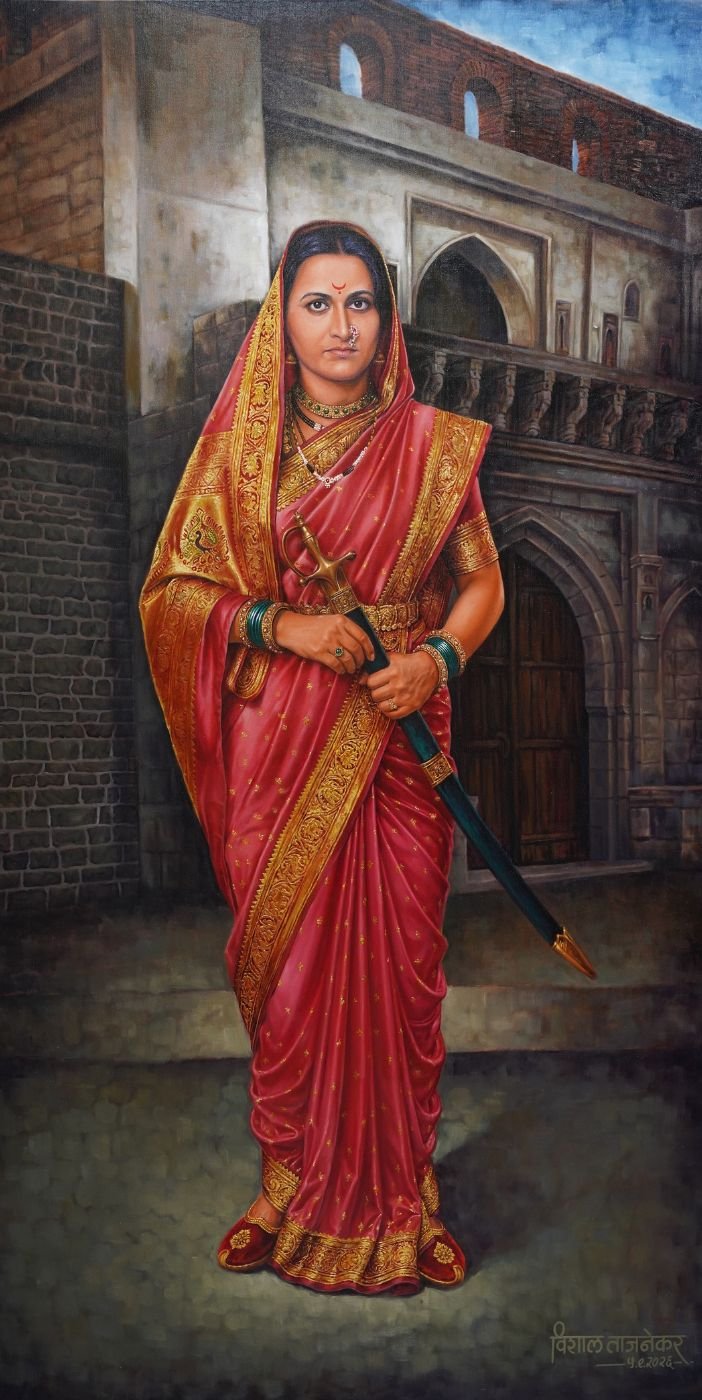
Rajmata Jijau
राजमाता जिजाऊ
Rajmata Jijau is remembered as a skilled organiser, a visionary administrator who gave an intellectual foundation to the idea of Swarajya, and an exemplary mother. She was born at Sindkhed Raja in present-day Buldhana district of Maharashtra to the valiant nobleman Lakhuji Jadhavrao and Mhalasabai. She imbibed the values of courage, self-respect and justice from the Jadhavrao family. She later married Shahajiraje of the Bhosale family of Verul. Sambhajiraje and Shivajiraje were their two sons. The values of the Jadhavrao, Nimbalkar and Bhosale families shaped her intellectual, political and social outlook.
Deeply concerned by the hardships faced by ordinary people amid power struggles and continual warfare in the Deccan, Jijau gave priority to public welfare. While Shahajiraje was in Karnataka, she looked after the family and also oversaw matters related to the administration of the Pune jagir. Following the destruction of Pune by the Adilshahi commander Murar Jagdev, she guided its resettlement. She encouraged agriculture, emphasised public security and upheld just governance. While nurturing the idea of Swarajya in young Shivaji Maharaj and the Mavalas, Jijau instilled values of justice, valour, respect for women, equality and public welfare. For Jijau, Swarajya was not merely political power but a system rooted in public welfare. Her inclusive approach gave the idea of Swarajya a strong social foundation.
In the male-dominated society of the seventeenth century, Jijau demonstrated political acumen and administrative ability through her work. By placing public welfare, justice and equality at the centre, her foresight, accomplishments and value-based leadership laid a strong foundation for a people-oriented Swarajya.
स्वराज्याच्या संकल्पनेला वैचारिक अधिष्ठान देणाऱ्या कुशल संघटक, दूरदृष्टी असलेल्या प्रशासक आणि आदर्श माता म्हणून राजमाता जिजाऊंना ओळखले जाते. त्यांचा जन्म महाराष्ट्रातील बुलढाणा जिल्ह्यातील सिंदखेडराजा येथे शूरवीर सरदार लखुजी जाधवराव आणि म्हाळसाबाई यांच्या पोटी झाला. जाधवराव घराण्यातील शौर्य, स्वाभिमान आणि न्यायबुद्धीचे संस्कार त्यांच्यावर झाले. पुढे वेरूळच्या भोसले घराण्यातील शहाजीराजेंशी त्यांचा विवाह झाला. संभाजीराजे आणि शिवाजीराजे हे त्यांचे दोन पुत्र होत. माहेरच्या जाधवराव, आजोळच्या निंबाळकर आणि सासरच्या भोसले घराण्यांतील संस्कारांतून जिजाऊंच्या वैचारिक, राजकीय आणि सामाजिक व्यक्तिमत्त्वाला व्यापक आकार मिळाला.
दख्खनमधील सत्तासंघर्ष आणि सततच्या युद्धांमुळे सर्वसामान्यांची झालेली दुरावस्था पाहून व्यथित झालेल्या जिजाऊंनी जनकल्याणाला प्राधान्य दिले. शहाजीराजे कर्नाटकात असताना त्यांनी कुटुंबाची जबाबदारी सांभाळत पुणे जहागिरीच्या कारभारावर लक्ष ठेवले. आदिलशाही सरदार मुरार जगदेवाने केलेल्या विध्वंसानंतर उध्वस्त झालेले पुणे पुन्हा वसवताना त्यांनी मार्गदर्शन केले. शेतीला प्रोत्साहन, लोकांची सुरक्षितता आणि न्यायनिष्ठ कारभार यांवर त्यांनी भर दिला. जिजाऊंनी शिवरायांच्या जडणघडणीत न्याय, पराक्रम, स्त्रीसन्मान, समता आणि प्रजाहिताची मूल्ये रुजवली. स्वराज्य हे केवळ राजकीय सत्ता नसून लोककल्याणकारी व्यवस्था असावी, ही जिजाऊंची शिकवण शिवाजी महाराजांच्या राज्यकारभारात दिसते. जिजाऊंनी सर्व सामाजिक घटकांना सोबत घेण्याची भूमिका घेत स्वराज्याच्या विचारांना सामाजिक अधिष्ठान दिले.
सतराव्या शतकातील पुरुषप्रधान समाजात जिजाऊंनी आपल्या कार्यातून राजकीय निर्णयक्षमता आणि प्रशासकीय जाण यांचे प्रभावी दर्शन घडवले. लोककल्याण, न्याय आणि समता यांना केंद्रस्थानी ठेवणाऱ्या राजमाता जिजाऊंच्या दूरदृष्टी, कर्तृत्व आणि मूल्यनिष्ठ नेतृत्वाने लोकाभिमुख स्वराज्याची भक्कम पायाभरणी केली.