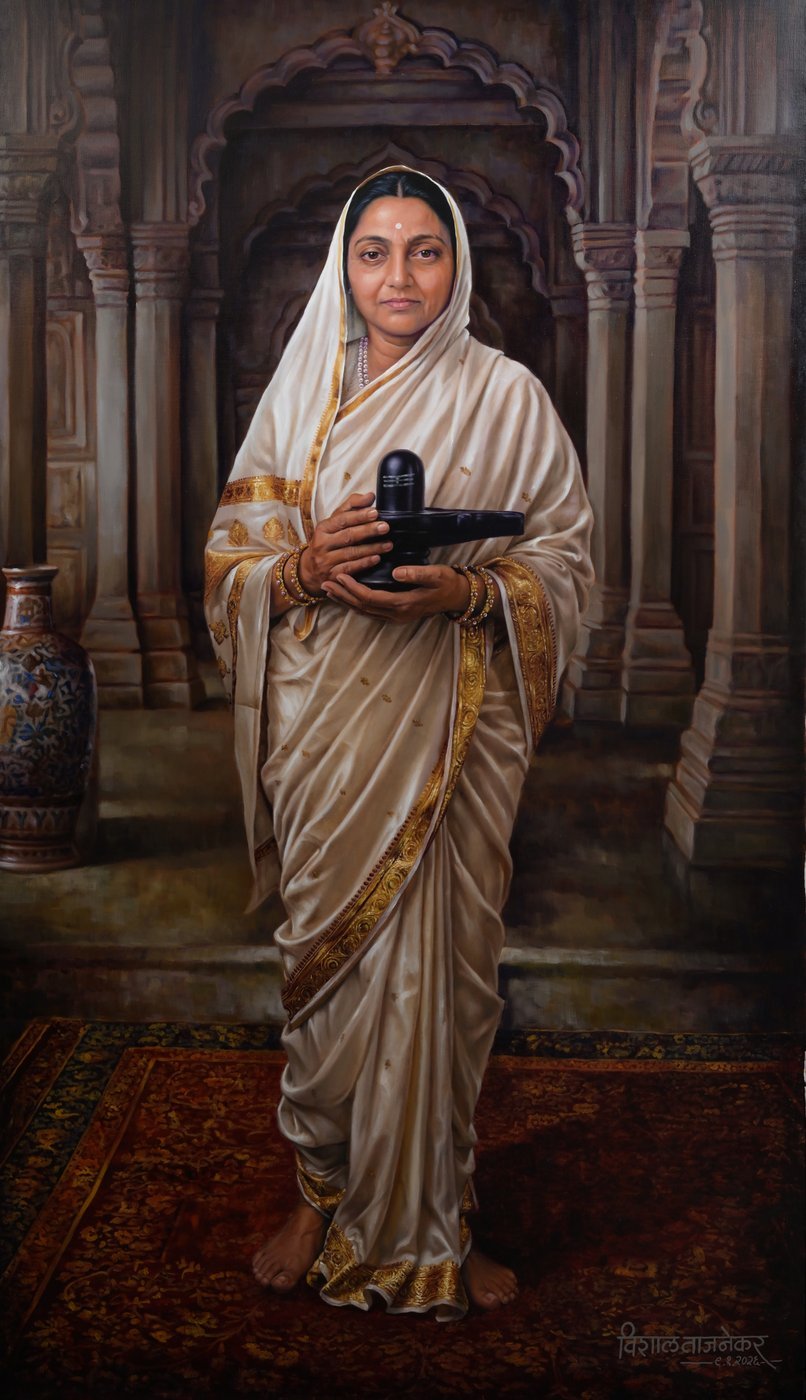
Punyashlok Ahilyadevi Holkar
पुण्यश्लोक अहिल्यादेवी होळकर
In the history of the Maratha Empire in the eighteenth century, Ahilyadevi holds a distinguished place as a just, compassionate and visionary ruler. She was born in Chondi, present-day Ahilyanagar district, Maharashtra, to village headman Mankoji Shinde. Malharrao Holkar, the Subedar of Malwa, arranged her marriage to his son Khanderao and trained her in administration. After Khanderao's death in 1754, Malharrao prevented her from committing sati. Following the deaths of Malharrao and her son Malerao, Ahilyadevi assumed the reins of the Holkar State in 1767.
Ahilyadevi gave the highest priority to justice, transparency and public welfare in governance. Making Maheshwar her capital, she promoted trade, industry, art and culture, and encouraged the Maheshwari textile industry, creating employment for artisans. She ensured that farmers were treated fairly under the revenue system and provided relief through tax concessions during famines. By maintaining cordial relations with Bhils and other tribal communities, she ensured her people's safety and security. She also promoted the construction of roads, wells and public facilities. From her private wealth, she built temples, ghats, dharamshalas and facilities for pilgrims at Kashi, Gaya, Ujjain, Dwarka, Nashik and Rameshwaram.
By placing public welfare at the heart of governance, Ahilyadevi established an enduring model of administrative integrity, justice and sound governance. Her broad vision of religious tolerance and cultural preservation is evident in her work. The legacy of Punyashlok Ahilyadevi, who established an ideal model of governance in the eighteenth century, continues to inspire people-centred and justice-oriented governance even today.
अठराव्या शतकातील मराठा साम्राज्याच्या इतिहासात न्यायप्रिय, प्रजावत्सल आणि दूरदर्शी राज्यकर्ती म्हणून अहिल्यादेवींचे स्थान अत्यंत महत्त्वाचे आहे. त्यांचा जन्म महाराष्ट्रातील अहिल्यानगर जिल्ह्यातील चौंडी गावचे पाटील माणकोजी शिंदे यांच्या घराण्यात झाला. माळव्याचे सुभेदार मल्हारराव होळकरांनी आपला पुत्र खंडेराव यांच्याशी अहिल्यादेवींचा विवाह घडवून आणला. मल्हाररावांनी त्यांना प्रशासनातले बारकावे शिकवले. १७५४ मध्ये खंडेरावांच्या निधनानंतर मल्हाररावांनी त्यांना सती जाण्यापासून परावृत्त केले. मल्हारराव आणि पुत्र मालेराव यांच्या निधनानंतर १७६७ मध्ये अहिल्यादेवींनी होळकर राज्याची सूत्रे हाती घेतली.
अहिल्यादेवींनी राज्यकारभारात न्याय, पारदर्शकता आणि लोककल्याणाला सर्वोच्च प्राधान्य दिले. त्यांनी महेश्वर ही राजधानी विकसित करून व्यापार, उद्योग, कला आणि संस्कृतीला चालना दिली; महेश्वरी वस्त्रउद्योगाला प्रोत्साहन देत कारागिरांना रोजगार दिला. महसूल व्यवस्थेत शेतकऱ्यांवर अन्याय होणार नाही याची दक्षता घेतली आणि दुष्काळात करसवलती देऊन प्रजेला दिलासा दिला. भिल्ल आणि इतर आदिवासी जमातींशी सलोख्याचे संबंध ठेवून त्यांनी सुरक्षिततेचे वातावरण निर्माण केले. रस्ते, विहिरी आणि सार्वजनिक सुविधांच्या निर्मितीलाही त्यांनी प्रोत्साहन दिले. आपल्या खाजगी संपत्तीतून त्यांनी काशी, गया, उज्जैन, द्वारका, नाशिक आणि रामेश्वरम येथे मंदिरे, घाट, धर्मशाळा व यात्रेकरूंसाठी सुविधा उभारल्या.
राजसत्तेचा उपयोग प्रजाहितासाठी करणाऱ्या अहिल्यादेवींनी प्रशासकीय सचोटी, न्याय आणि लोककल्याणाचा आदर्श निर्माण केला. धार्मिक सहिष्णुता आणि सांस्कृतिक ठेव्याच्या जतनाची त्यांची व्यापक दृष्टी त्यांच्या कार्यातून स्पष्ट होते. अठराव्या शतकात आदर्श राज्यकारभाराची घडी बसवणाऱ्या पुण्यश्लोक अहिल्यादेवींचा वारसा आजही लोककल्याणकारी आणि न्यायाधिष्ठित शासनासाठी प्रेरणादायी ठरतो.