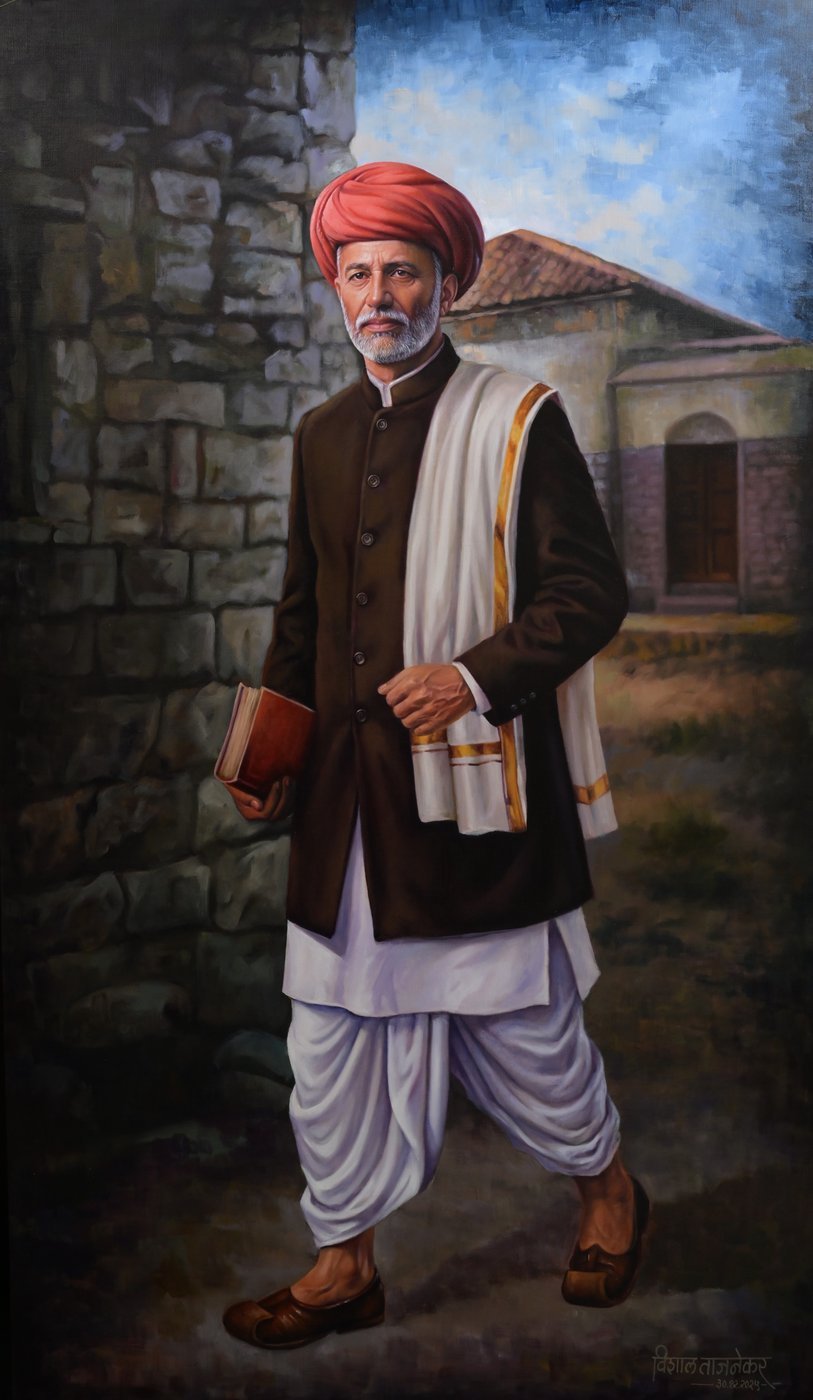
Mahatma Jotirao Phule
महात्मा जोतीराव फुले
Jotirao, a pioneering thinker who laid the foundations of modernity in India, was born into the family of Govindrao Phule in Pune, Maharashtra. The social inequality he experienced in everyday life and the modern ideas of human rights he encountered through books at a missionary school shaped his personality and outlook. At the time, women and communities regarded as Shudra and Atishudra were denied access to education and opportunities for progress. To break these barriers, he established schools for girls and untouchables, with the support of Savitribai and a group of friends hailing from various castes.
Examining caste discrimination, the oppression of women and social injustice, he wrote 'Tritiya Ratna', 'Brahmananche Kasab', 'Gulamgiri' and 'Shetkaryacha Asud'. Through 'Sarvajanik Satyadharma', he presented a path based on equality and humanity. In 1869, he published a ballad on Chhatrapati Shivaji Maharaj. In 1873, he founded the Satyashodhak Samaj, giving direction to the organised struggle against caste discrimination, ritualism and social inequality. Through initiatives such as the Infanticide Prevention Home, night schools and relief kitchens during famines, he supported the disadvantaged. By promoting modern approaches to agriculture and serving as a member of the Pune Municipality, he broadened the scope of social reform. He also introduced Satyashodhak religious ceremonies, challenging religious intermediaries.
Through his lifelong struggle for education, social justice, women's emancipation and farmers' rights, Jotirao inspired the oppressed to fight for human dignity and rights. For challenging entrenched social inequality through both thought and action, the people honoured him with the title 'Mahatma'. As a pioneer of social transformation in modern India, Mahatma Phule became a leading figure in the struggle for equality, freedom and human dignity.
भारतात आधुनिकतेची पायाभरणी करणारे कर्ते विचारवंत असलेल्या जोतीरावांचा जन्म पुण्यातील गोविंदराव फुले यांच्या कुटुंबात झाला. प्रत्यक्ष जीवनात अनुभवलेली सामाजिक विषमता आणि मिशनरी शाळेत शिक्षण घेताना वाचलेल्या पुस्तकांतून परिचित झालेले मानवी हक्कांचे आधुनिक विचार यांच्या घुसळणीतून त्यांचे व्यक्तिमत्त्व घडले. त्या काळात स्त्रियांना आणि समाजाने शूद्रातिशूद्र ठरवलेल्या जातींना शिक्षण व प्रगतीच्या वाटा खुल्या नव्हत्या. ही कुंपणे तोडण्यासाठी जोतीरावांनी जीवनसाथी सावित्रीबाई आणि आपल्या सर्वजातीय मित्रांच्या मदतीने पुण्यात मुलींसाठी आणि अस्पृश्य मानलेल्या जातींसाठी शाळा सुरू केल्या.
जातिभेद, स्त्रीदास्य आणि सामाजिक अन्यायाची चिकित्सा करत त्यांनी 'तृतीय रत्न', 'ब्राह्मणांचे कसब', 'गुलामगिरी', 'शेतकऱ्याचा असूड' यांसारखे ग्रंथ लिहिले. 'सार्वजनिक सत्यधर्म' मधून समानतेचा व माणुसकीचा मार्ग दाखवला. १८६९मध्ये त्यांनी 'पवाडा छत्रपती शिवाजी राजे भोसले यांचा' प्रकाशित केला. शिवाजी महाराजांच्या जयंतीचा सार्वजनिक उत्सव जोतीरावांच्या प्रेरणेने सत्यशोधक समाजातर्फे १८९०पासून केला जाऊ लागला. १८७३ मध्ये सत्यशोधक समाजाची स्थापना करून जातिभेद, कर्मकांड आणि सामाजिक विषमतेविरुद्ध संघटित चळवळीला दिशा दिली. बालहत्या प्रतिबंधक गृह, रात्रशाळा आणि दुष्काळातील अन्नछत्रे यांसारख्या उपक्रमांतून त्यांनी वंचितांना आधार दिला. महात्मा फुल्यांनी शेतकऱ्यांना आधुनिक शेतीची दिशा दाखवली. पुणे नगरपालिकेचे सदस्य म्हणून त्यांनी अनेक सार्वजनिक प्रश्नांवर काम केले. सत्यशोधक पद्धतीने धर्मविधी सुरू करून त्यांनी धार्मिक मध्यस्थीला आव्हान दिले.
शिक्षण, सामाजिक न्याय, स्त्री-मुक्ती आणि शेतकरीहितासाठी आयुष्यभर संघर्ष करणाऱ्या जोतीरावांनी वंचितांना माणूसपणाच्या हक्कांसाठी लढण्याची प्रेरणा दिली. समाजातील रूढ विषमतेला विचार आणि कृतीने आव्हान देणाऱ्या या समाजसुधारकाला जनतेने 'महात्मा' पदवी बहाल केली. आधुनिक भारताच्या सामाजिक परिवर्तनाची पायाभरणी करणारे महात्मा फुले हे समता, स्वातंत्र्य आणि माणुसकीच्या लढ्याचे अग्रदूत आहेत.