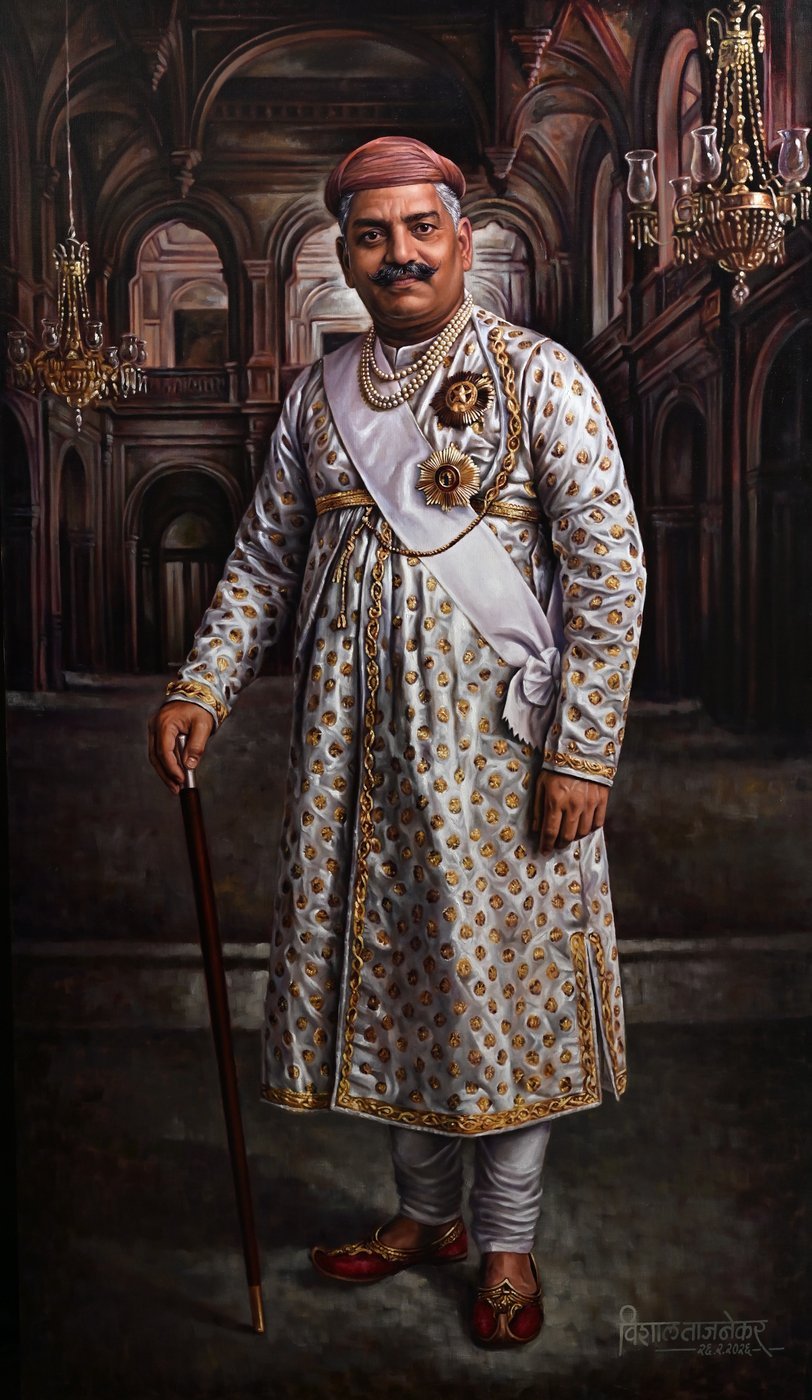
Maharaja Sayajirao Gaekwad
महाराजा सयाजीराव गायकवाड
Born as Gopalrao in Kavalane near Nashik, he was adopted by Maharani Jamnabai of the Baroda State and given the name 'Sayajirao'. He ascended the throne of Baroda in 1875. After six years of administrative training, he assumed the reins of the state in 1881. Facing challenges such as an empty treasury, a disordered administrative system and widespread ignorance, he resolved to transform the Baroda State into a progressive state.
Sayajiraje brought about social, educational, economic and cultural transformation in the lives of his people. He promoted knowledge through free and compulsory primary education, education for the socially oppressed, women's and vocational education, public libraries and scholarships. He advanced local self-government, the judicial system, agricultural reforms, irrigation, industry, healthcare and infrastructure. In 1908, he established the Bank of Baroda, giving institutional strength to economic development. Opposing regressive social practices, he supported women's advancement and social equality. He helped many promising students pursue higher education, including Dr. Babasaheb Ambedkar. By patronizing art, literature, research and technical education, he transformed Baroda into a centre of knowledge, culture and progress.
At a time when monarchy was widely associated with absolute authority, Sayajiraje placed the welfare of his people at the centre of governance and used royal power for their overall progress. As a scholarly, progressive and visionary ruler, he opened pathways to knowledge, self-respect and social justice. By transforming the Baroda State into a modern, progressive and enlightened state, Sayajiraje established an enduring example of people-oriented and enlightened governance in Indian history.
नाशिकजवळील कवळणे येथे जन्मलेल्या गोपाळरावांना बडोदा संस्थानाच्या महाराणी जमनाबाई यांनी दत्तक घेऊन 'सयाजीराव' हे नाव दिले. ते १८७५ मध्ये बडोद्याच्या गादीवर विराजमान झाले. सहा वर्षांच्या प्रशासकीय शिक्षणानंतर १८८१ मध्ये त्यांनी राज्याची सूत्रे हाती घेतली. रिकामी तिजोरी, विस्कटलेली प्रशासकीय घडी आणि अज्ञानाचा अंधकार अशी आव्हाने पेलत त्यांनी बडोदा संस्थानाला प्रगत राज्य बनवण्याचा ध्यास घेतला.
सयाजीराजेंनी प्रजेच्या जीवनात सामाजिक, शैक्षणिक, आर्थिक व सांस्कृतिक परिवर्तन घडवले. मोफत व सक्तीचे प्राथमिक शिक्षण, अस्पृश्यांसाठी शिक्षण, महिला व व्यवसाय शिक्षण, सार्वजनिक ग्रंथालये आणि शिष्यवृत्ती यांच्या माध्यमातून ज्ञानाचा प्रसार केला. स्थानिक स्वराज्य, न्यायव्यवस्था, कृषी सुधारणा, सिंचन, उद्योग, आरोग्यसेवा आणि पायाभूत सुविधांना चालना दिली. १९०८ मध्ये 'बँक ऑफ बडोदा'ची स्थापना करून आर्थिक विकासाला संस्थात्मक बळ दिले. सामाजिक रुढींना विरोध करत त्यांनी स्त्रीसुधारणा व सामाजिक समतेला पाठबळ दिले. डॉ. बाबासाहेब आंबेडकरांसह अनेक होतकरू विद्यार्थ्यांना उच्च शिक्षणासाठी मदत केली. कला, साहित्य, संशोधन आणि तंत्रशिक्षणाला आश्रय देत त्यांनी बडोद्याला ज्ञान, संस्कृती व प्रगतीचे केंद्र बनवले.
राजेशाही म्हणजे निरंकुश सत्ता मानली जात असताना, सयाजीराजेंनी प्रजाहिताला केंद्रस्थानी ठेवून राजसत्तेचा उपयोग समाजाच्या सर्वांगीण प्रगतीसाठी केला. विद्याव्यासंगी, पुरोगामी आणि द्रष्टे राजे म्हणून त्यांनी ज्ञान, स्वाभिमान व सामाजिक न्यायाचा मार्ग प्रशस्त केला. बडोदा संस्थानाला आधुनिक, प्रगत आणि प्रबुद्ध राज्याचे स्वरूप देणाऱ्या सयाजीराजेंचे कार्य आधुनिक भारताच्या इतिहासातील आदर्श प्रजाहितदक्ष राजसत्तेचे उदाहरण ठरते.